Master Emoji Bejeweled: Scoring Tips & Strategies
Understanding the Core Mechanics
Bejeweled is one of those games that seems simple on the surface—match three emojis, watch them disappear, get points. But beneath that simplicity lies a deep strategic layer. The difference between a casual player and someone hitting massive scores comes down to understanding exactly how the game works.
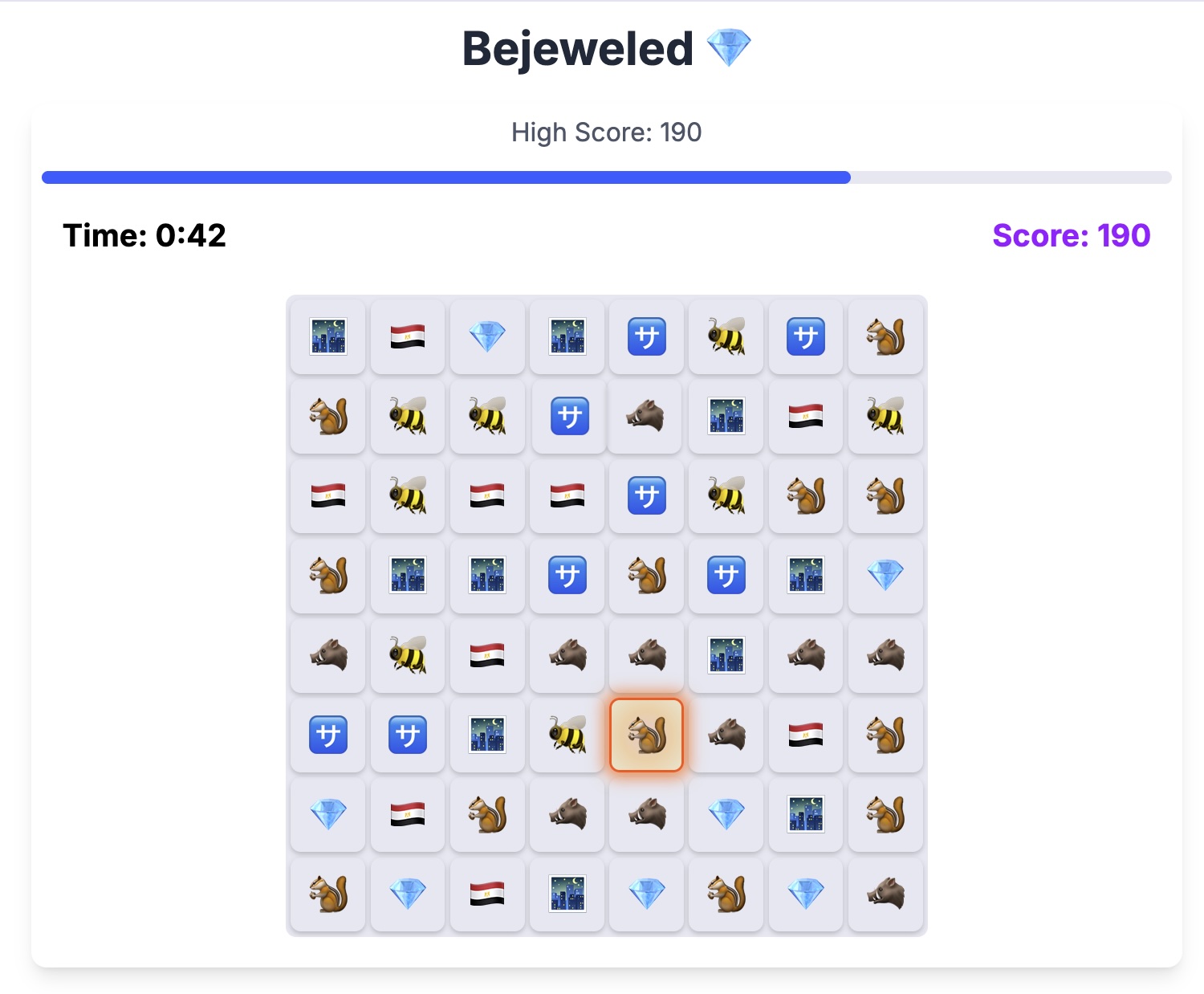

The basic rule: swap two adjacent emojis to create a line of three or more matching emojis. When you do, those emojis clear, new ones fall from above, and you earn points. But that's just the beginning.
What really drives high scores is the cascade system. When emojis clear and new ones fall, they sometimes create new matches automatically. Those automatic matches score bonus points and can trigger further cascades. A single good move can result in a chain reaction worth 10x what a basic three-match earns.
This is why Bejeweled rewards planning over speed. The flashy move isn't always the right move. Sometimes the quiet match at the bottom of the board sets up a devastating cascade.
How Scoring Actually Works
Let me break down the scoring system, because understanding this changes how you approach every move:
Base Points
A basic three-emoji match earns a base amount (let's call it 100 points for simplicity). Four-match: 200. Five-match: 400. The value doubles for each additional emoji beyond three.
Cascade Multipliers
Here's where it gets interesting. When a cascade occurs (a match created by falling emojis after your move), the multiplier increases:
- First cascade: 2x multiplier
- Second cascade: 3x multiplier
- Third cascade: 4x multiplier
- And so on...
A five-match that triggers a three-cascade chain might look like this:
- Initial five-match: 400 base points
- First cascade (three-match): 100 × 2 = 200
- Second cascade (four-match): 200 × 3 = 600
- Third cascade (three-match): 100 × 4 = 400
- Total: 1,600 points from one move
Compare that to making four separate three-matches (400 points). The cascade approach yields 4x the score for the same total clears.
Special Emojis
Creating matches of four or more generates special emojis with unique abilities:
Four-match (line clear): Creates an emoji that clears an entire row or column when matched. Worth extra points and often triggers major cascades. Five-match (explosion): Creates an emoji that clears a 3x3 area around it when matched. Huge point potential. L-shape or T-shape (bomb): Creates an emoji that explodes in both directions when triggered.Matching two special emojis together creates even more dramatic effects. Learning to set these up is essential for high scores.
Winning Basics
Now that you understand the mechanics, here's how to apply them:
Strategy 1: Play Bottom-Up
This is the single most important habit. Always scan the bottom of the board first. Matches at the bottom cause more emojis to shift, creating more opportunities for cascades.
A three-match at the very bottom affects every column above those positions. A three-match at the top affects nothing below. Same points for the initial match, but vastly different cascade potential.
I made this mistake for way too long—my eyes naturally start at the top. Training myself to start scanning from the bottom row improved my scores noticeably.
Strategy 2: Create Special Emojis Intentionally
Don't just take any match you see. Look for opportunities to create four-matches and five-matches. The special emojis they generate compound your scoring throughout the game.
When I see a near-five-match (four in a row with a fifth one swap away), I prioritize completing it over taking an easier three-match elsewhere. The special emoji is almost always worth more in the long run.
Strategy 3: Set Up Combinations Before Triggering
Before matching your special emojis, check if you can position another special emoji adjacent to it. Matching two special emojis together (like a line-clear with an explosion) creates massive chain reactions.
This requires patience. Sometimes I'll spend several moves maneuvering pieces into position before pulling the trigger. The payoff justifies the setup.
Strategy 4: Think Two Moves Ahead
Before making a move, look at what will fall into place. Can you predict whether the falling emojis will create matches? Sometimes the best move is the one that positions future cascades, not the one that scores immediately.
This skill develops with practice. At first, you'll miss most cascade predictions. Over time, your pattern recognition improves until you can "see" 2-3 moves ahead reliably.
Strategy 5: Don't Always Take the Biggest Current Match
A five-match on the right side might score less than a three-match on the left if the three-match triggers a four-cascade chain. Evaluate the full consequences of each option.
Admittedly, this is hard to do quickly. In timed modes, you'll sometimes have to go with instinct. But in untimed modes, take the extra seconds to compare outcomes.
Going Deeper
Once the fundamentals are natural, these advanced approaches push scores even higher:
Cascade Counting
Before making a move, mentally count the expected cascades. I do this by imagining the emojis disappearing and seeing what would fall into place. Is there a match waiting? Would that match create another?
With practice, this becomes semi-automatic. You stop thinking "what's my best move" and start seeing cascade sequences at a glance.
Board Control
Sometimes the board state gets chaotic—lots of near-matches scattered around, no clear cascade opportunities. In these situations, it can be worth making smaller matches to "clean up" the board and create more structured patterns.
Think of it like resetting. A controlled board with clear opportunities beats a messy board where you're guessing.
Saving Special Emojis
Just because you can match a special emoji doesn't mean you should. Special emojis are resources. Ask: will matching this now create more points than saving it for a better opportunity?
Sometimes I'll leave a special emoji sitting for 5-10 moves until the perfect setup appears. The explosive combo that results justifies the wait.
Edge Play
Matches along the edges of the board affect fewer adjacent areas, which means less cascade potential but more predictability. Use edge matches when you want controlled, specific results rather than chaotic chains.
This is useful when you're maneuvering pieces into position and don't want random cascades disrupting your setup.
Color Flow Awareness
Notice which emoji colors are abundant and which are scarce. If 🔴 is everywhere but 🔵 is sparse, 🔵 matches are harder to create. Adjust your strategy accordingly—don't hunt for rare-color matches when common-color cascades are readily available.
The board composition shifts constantly as new emojis fall. Stay aware of these shifts.
Time Management in Timed Modes
Our timed mode adds pressure, and the strategies shift somewhat:
Speed vs. Efficiency Trade-off
In timed modes, making fast okay moves often beats making slow perfect moves. You earn nothing while thinking. Even a basic three-match keeps the points flowing.
That said, don't just spam random matches. The ideal balance is quick pattern recognition followed by immediate action. Train yourself to see opportunities faster rather than lowering your standards.
Cascade Awareness Under Time Pressure
Even in timed modes, bottom-board matches remain optimal. The difference is you can't spend 10 seconds analyzing—you need to spot bottom opportunities in 1-2 seconds.
This is why practice in untimed mode builds skills that transfer to timed mode. The pattern recognition becomes automatic.
Don't Panic at Low Time
When time runs low, panic leads to worse moves. A calm three-match is better than a frantic swap that doesn't actually create a match. Stay steady and trust your trained instincts.
Traps to Watch For
After playing (too much) Bejeweled and watching others play, here are the recurring errors:
Tunnel Vision on One Match
Seeing a four-match and grabbing it immediately without scanning the board. There might be a five-match elsewhere or a move that creates multiple matches.
Top-Heavy Play
Making matches at the top of the board, leaving potential energy on the table. Force yourself to scan bottom-to-top.
Wasting Special Emojis
Matching a special emoji into a basic three-match when it could have been combined with another special for a massive combo.
Chasing Rare Colors
Spending multiple moves trying to complete a match when simpler options exist elsewhere.
Moving Too Fast in Untimed Mode
There's no penalty for thinking in untimed mode. Rushing doesn't help and often misses better opportunities.
Mental Tips and Mindset
Bejeweled performance is partly mental:
Stay Relaxed
Tense muscles and shallow breathing impair pattern recognition. Consciously relax your body, especially during timed modes. It sounds soft, but it works.
Fresh Eyes
If you've been playing for an hour and your scores are declining, take a break. Mental fatigue is real. Five minutes away resets focus.
Accept Variance
Sometimes the board just doesn't cooperate. Emojis fall in ways that offer no good moves. Bad luck exists. Don't let frustrating boards tilt you into making even worse decisions.
Progress Over Perfection
Every game won't be your best. Focus on making consistently good decisions rather than achieving a specific score. The high scores follow naturally from good habits.
Comparing Emoji Bejeweled to Classic
If you've played the original Bejeweled with gems, you might wonder if emoji Bejeweled is different. Mechanically, they're identical. But the visual experience differs:
Emojis have more varied shapes and associations. A board full of 🍎🎾🔔🌙🎸🌸 feels different from colored gems. Some people find emojis easier to distinguish; others prefer the clean geometry of gems.
The strategies transfer completely. If you're good at one, you'll be good at the other. It's purely aesthetic preference.
Setting Personal Records
If you're chasing high scores, here's a practical approach:
Track Your Scores
Keep a note of your top scores. Seeing progress motivates continued improvement.
Identify Your Weak Points
Are you missing cascades? Wasting specials? Being too slow? Focus practice on your weakest area rather than general play.
Learn from Good Runs
After a high-scoring game, reflect on what went well. What specific moves drove the score? Try to replicate those patterns.
Don't Compare to Leaderboards Initially
Global leaderboards can include practiced players with thousands of hours. Compare yourself to your past self, not to strangers.
Why Emoji Psychology Matters
Emoji Bejeweled rewards thoughtful play over frantic matching. The core strategies—bottom-up play, cascade awareness, special emoji management—can be learned and refined.
Start by building habits: always scan the bottom first, always consider cascade potential, always look for special emoji setups. These become automatic with practice.
And honestly? Just enjoy it. The strategic depth is there when you want it, but matching colorful emojis can also just be a pleasant way to spend ten minutes. Not every game needs to be a high-score run.
Now go crush some emojis.
Sources & Further Reading
- Unicode Full Emoji List — official reference from the Unicode Consortium
- Emojipedia — platform comparisons and emoji changelog
- Unicode Consortium — the organization behind the emoji standard
Last updated: February 2026
Written by ACiDek
Creator & Developer
Developer and emoji enthusiast from Czech Republic. Creator of emodji.com, building tools and games that make digital communication more fun since 2024. When not coding, probably testing which emoji combinations work best for different situations.
More articles by ACiDek →Explore Emoji Wiki
Discover detailed meanings, usage examples, and cultural context for popular emoji in our emoji wiki. Each entry includes usage tips, combinations, and platform differences.
Emoji Tools
Put what you learned into practice with our free emoji tools.